Introducing Thomason, the Other Half of Trey Lewis
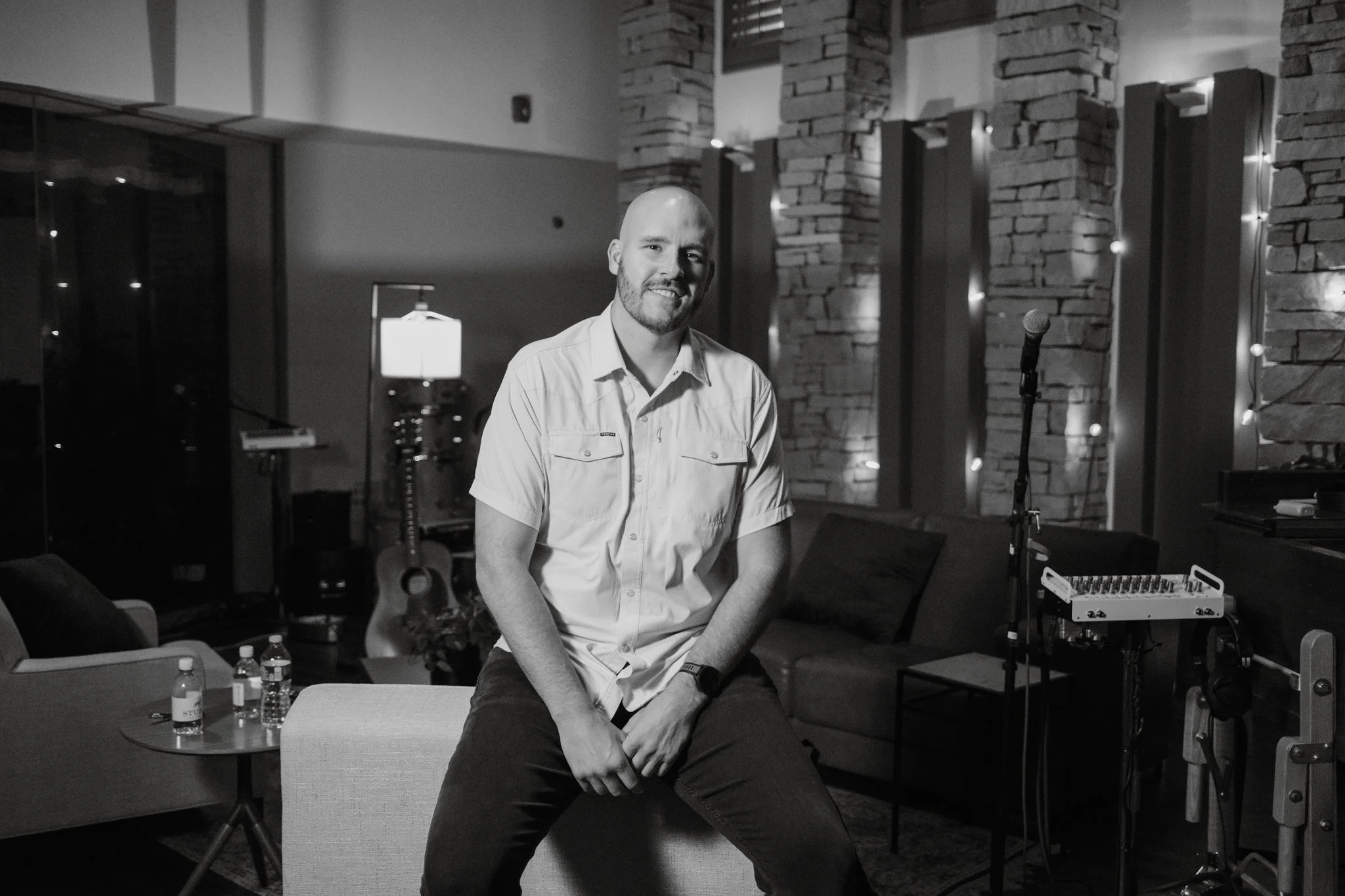
Photo by Mitch Wallis.
If you think you know Trey Lewis, you really only know half of him.
That half went viral during the pandemic for the tongue-in-cheek “Dicked Down in Dallas” and has since crystallized into a public persona defined by humor, irreverence, and a sharp instinct for attention-grabbing songwriting.
The other half, Thomason, is a separate creative identity that he has quietly been releasing music under since 2018.
As Thomason, which is his given surname, he steps away from the raunchy and performative side of himself and into something quieter, heavier, and far more intentional.
With the release of his new EP, White Van, out today, he leans further into that identity.
The four-track project is shaped not by spectacle but by nearly two decades of sobriety and a reflection on where he’s been, who he’s become, and where he’s going.
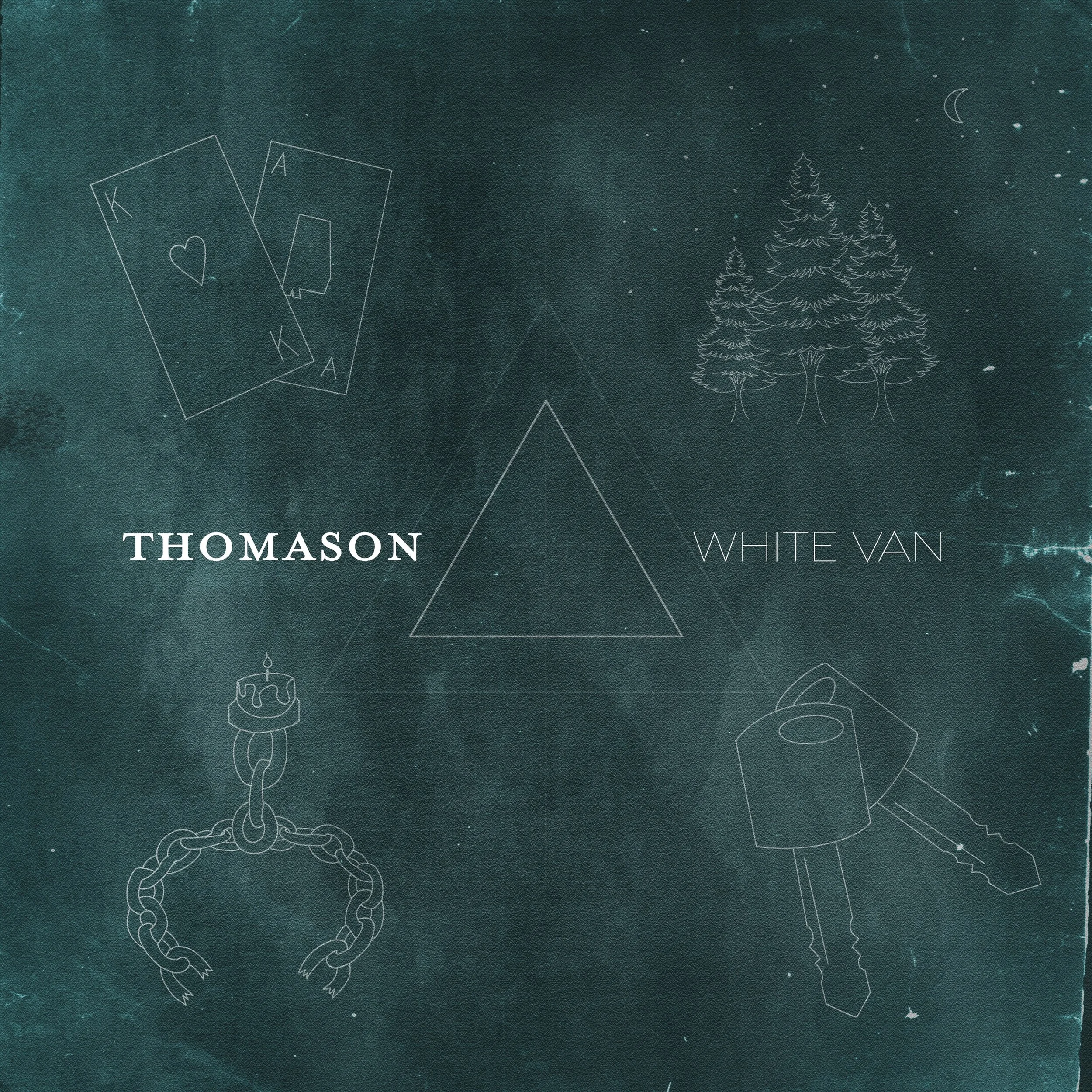
EP cover courtesy of Thomason.
The EP’s “Hill I’d Die On” is a nod to his Birmingham, Alabama roots and the legacy he hopes to leave behind one day. He felt it was fitting for the project in part due to his grandfather’s passing in December. “I just got to thinkin’ about him and how, when he passed away, he was surrounded by family and we were all up on the family land up on the mountain,” Thomason shares. “It got me thinkin’ about how I wanna go when I leave.”
“Almost Kings” is an ode to Thomason’s former guitar player of twelve years, Terry Adams, who traded life on the road for more time at home with his wife and children. He and Thomason cut their teeth together in their early days, initially touring in a white van and eventually upgrading to a tour bus to play for sold out crowds across the country after Thomason went viral.
“It was a bittersweet ending,” Thomason says of the end of his and Adams’s time together. “A lot of the theme of this project is home, and that was a part of my home for a long time, and he’s a great guy.”
With “Family Name,” the EP pivots back to Thomason’s family and his having to come to terms with the fact that the Thomason family name will end with him. He and his girlfriend of two years, Brooke Dobson, recently got engaged and have decided not to have children. “My father is no longer with us, my aunt’s gone, and my sister got married and changed her name, so I am the last one that has the family name,” Thomason explains. “It ends with me.”
The project closes with a full-circle title track that chronicles the story of how Thomason went from driving a white van for an addiction treatment center – where he was once a patient – to touring the country in one when his music career took off.
“I’ve always said to work in mental health or addiction, you have to be a special kind of person, and it just so happened that I was that special kind of person,” he says.
After trying alcohol for the first time at thirteen, Thomason was hooked. “I was like, ‘I’m doin’ that shit every chance I can get,’ you know?” he says, laughing. “I was like ‘Oh, well I’ll never smoke pot, I’ll just drink alcohol ‘cuz everybody does that and that’s socially acceptable,’ and then I smoked pot. Then I was like, ‘I’ll never do pills,’ and then I did pills, and then it was like, ‘I’ll never do cocaine,’ and then I did cocaine. I was always drawin’ the line in the sand.”
He spent three days in a juvenile detention center and later did time in county jail in Tuscaloosa. At one point, he also found himself semi-homeless, jumping from one friend’s couch to another and sleeping in his mom’s car during the day.
His breaking point came when he was nineteen. “I just got sick and tired of gettin’ sick and tired,” he admits. “It seemed there for a while, every time I got drunk or high, I either went to jail or ended up in the psych ward. I got tired of livin’ like that and went to treatment. That was the best decision I ever made.”
Now thirty-eight, Thomason is celebrating nearly nineteen years of sobriety. “My biggest piece of advice is don’t be scared to ask for help,” he shares on recovering from addiction. “I’m a man, I grew up in the south, and I was taught that you don’t show emotions and, if you get yourself in a pickle, you get yourself out of that pickle. That just isn’t the case in recovery,” he reflects. “It can be embarrassing, but you gotta ask people for help.”
Once Thomason got sober, he bought a guitar and taught himself how to play it. He also found himself back at the same treatment center – only this time as an employee rather than a patient. He taught lectures on the twelve steps of recovery, played original songs about recovery for patients, and transported patients to meetings in a white van – all the while sharing his own recovery story and trying to convince patients not to leave treatment prematurely.
His music therapy sessions helped him refine his guitar-playing and songwriting skills, which, in turn, led him to find success as a country music artist. Following the viral success of “Dicked Down in Dallas,” Thomason and his band toured the country in a white van. It’s this journey that lies at the heart of the EP’s title track and seamlessly ties the project together.
Across its four tracks, White Van threads together the people and places that have shaped Thomason – his family in Alabama, the bandmates who became home on the road, the recovery center that changed his life, and the fiancée he’s building a future with. Together, they form a portrait of legacy in real time.
Long after leaving Alabama, Thomason has found that the state’s imprint lingers in the people around him, including fellow native and country superstar Ella Langley. The pair met in Nashville in 2018 through a mutual friend, Mitch Wallace, shortly after Thomason relocated to the city from his home state.
Langley, who was nineteen at the time, quickly became like a younger sister to Thomason. The two ended up living in three different houses together over a five-year period with Wallace, Joybeth Taylor, and Matt McKinney.
“It was just wild, wild times,” Thomason reflects. “It’s really cool because we all moved here with just a dream – that’s it. Sleepless nights, tossin’ and turnin’ in our beds, thinkin’ what if I just give it a shot? What if somethin’ happens?”
Naturally, I prod Thomason for the biggest lesson he’s learned from Langley. “I would say the biggest thing with me and Ella is always friends first, music later,” he shares. “We had times where we would sit in our livin’ room and listen to demos together, but we also had a lot of times where we would just sit and talk about life and make sure each other were doin’ okay. It doesn’t matter who’s doin’ what or who has what tour – let’s talk about how you are doin’ mentally. That’s always been the thing for us – friends first.”
On the heels of his EP release, Thomason will be playing an encore to his recent debut at the Bluebird Café in Nashville on April 24th. Tour dates and more new music are also in the works.
Trey Lewis fans need not fear, however. While Thomason continues to develop his emotionally deep discography, he will continue to simultaneously deliver new favorites that Trey Lewis fans seemingly can’t get enough of.
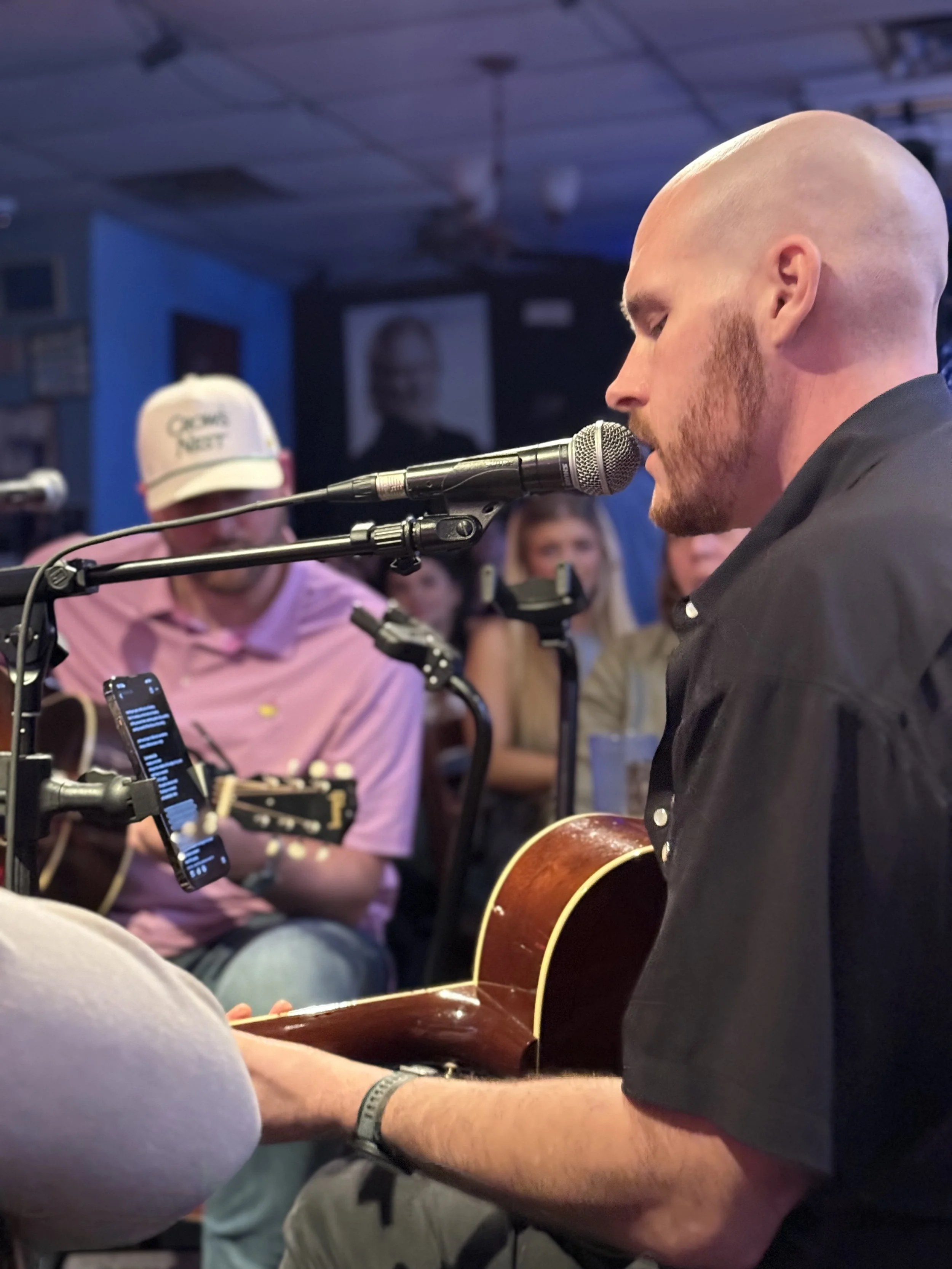
Thomason performing during his debut at Nashville’s Bluebird Café on April 2, 2026. Photo courtesy of Thomason.
Outside of music, Thomason’s recent engagement has marked another kind of milestone. He first met his fiancée, Brooke Dobson, a few years ago at CMA Fest when neither of them were single. The toxic relationship that Thomason had been in then finally came to a screeching halt after approximately the sixth breakup.
“I was like, ‘Alright, this is the breakup where I get it together, stayin’ at home, I’m not goin’ out.’ I was at the house for like four months just doin’ puzzles, readin’ books, just like creatin’ all these new habits and hobbies for myself of things that I had never tried,” Thomason shares.
Dobson then DM’d him on Instagram, inquiring as to whether he was planning on going out that night.
“I was like, ‘No! I don’t go out anymore! I just do puzzles and read books,’” he recalls. “And then, I got to thinkin’, I was like, ‘The only way a girl like that is messagin’ me is if she’s single,’ so I messaged her and was like, ‘Are you single?’ and she was like, ‘Yeah!’”
Two nights later, Dobson watched Thomason play a round at Tin Roof. The pair then went on a couple of dates and have been inseparable ever since.
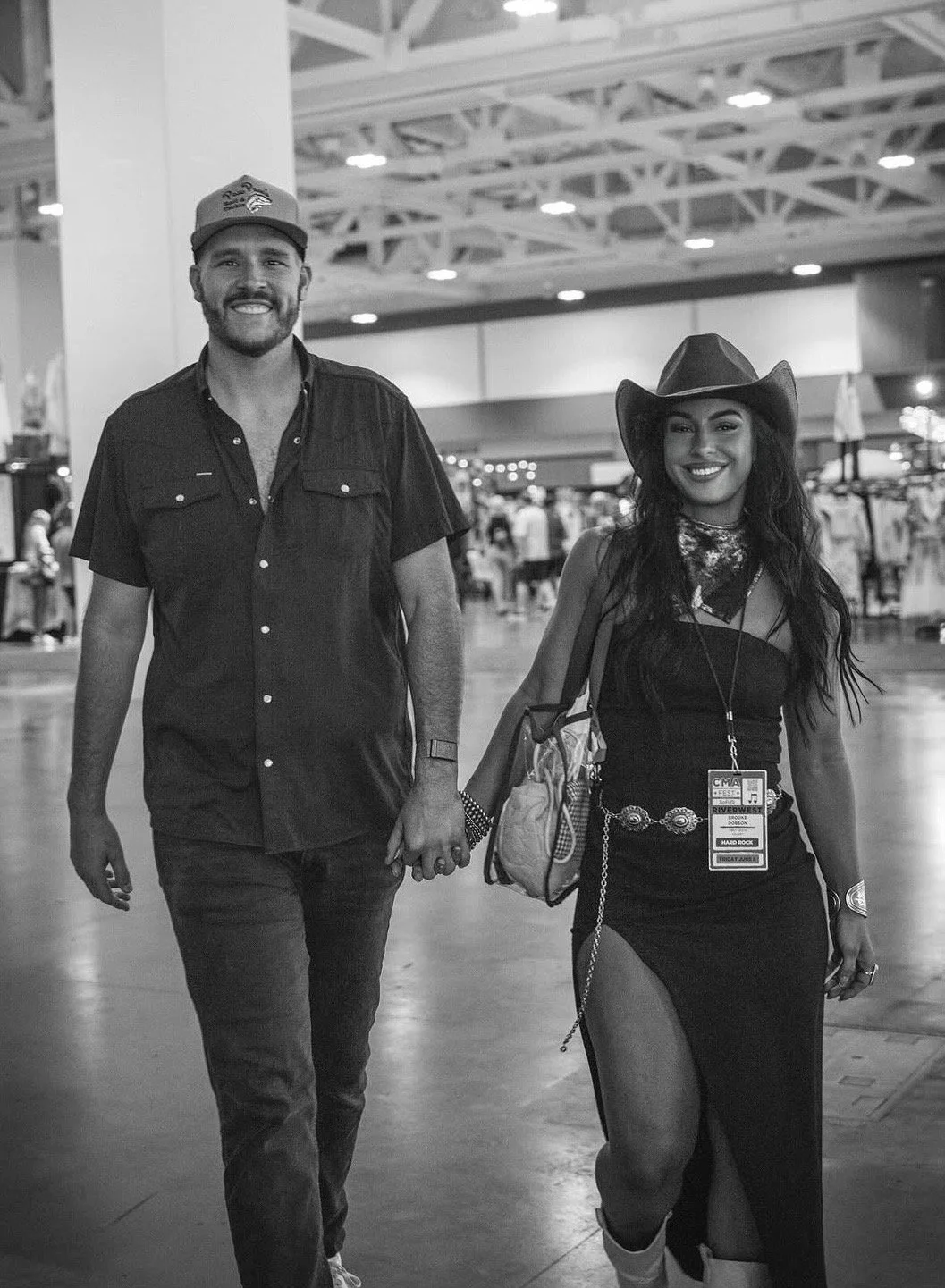
Thomason and Dobson. Photo by Mitch Wallis.
That same sense of starting over and building something steadier also lies at the heart of White Van. In the end, the EP isn’t interested in separating the versions of Thomason so much as it is in showing how they were always moving in parallel: the jokes and the gravity, the stage lights and the fluorescent hum of recovery center hallways, the boy who learned early how quickly life can spiral and the man who later learned how to take control.
If Trey Lewis is the version the world met first, Thomason is the one that stayed when the noise died down. White Van lives in that space between them – not choosing sides, just telling the truth as it comes, one mile at a time.